A burst pipe in January is one of the most expensive and disruptive things that can happen to a home, and almost all of it is preventable. Pittsburgh winters bring long stretches of deep cold, and the region’s many older homes were built before modern insulation was standard, which leaves plumbing exposed in basements, crawl spaces, and exterior walls. The encouraging part is that the steps to protect your pipes are simple, inexpensive, and far cheaper than the repair and water damage that follow a freeze. This guide is your complete prevention playbook, organized from the quick seasonal tasks to the longer-term upgrades worth considering.
If you are reading this because a pipe has already frozen, our separate guide on what to do when pipes freeze walks through thawing and emergency steps. This article is about making sure it never gets to that point.
Why Pittsburgh Pipes Are at Risk
Water expands as it freezes, and when it freezes inside a pipe, the pressure can build to the point where the pipe splits. The pipes most likely to freeze share a few traits: they are exposed to cold air, poorly insulated, and located away from the heated core of the house. In Pittsburgh that typically means pipes running through unheated basements, garages, and crawl spaces, lines along north-facing exterior walls, and plumbing in additions or older sections of a home with thin walls. Homes on the city’s higher elevations and ridgelines face an extra challenge from wind, which strips heat away from exterior walls and can freeze a pipe that would otherwise survive a calm cold night.
Before Winter Arrives: Your Preparation Checklist
The best time to protect your pipes is in the fall, before the first hard freeze. Work through these tasks while the weather is still mild.
Insulate Exposed Pipes
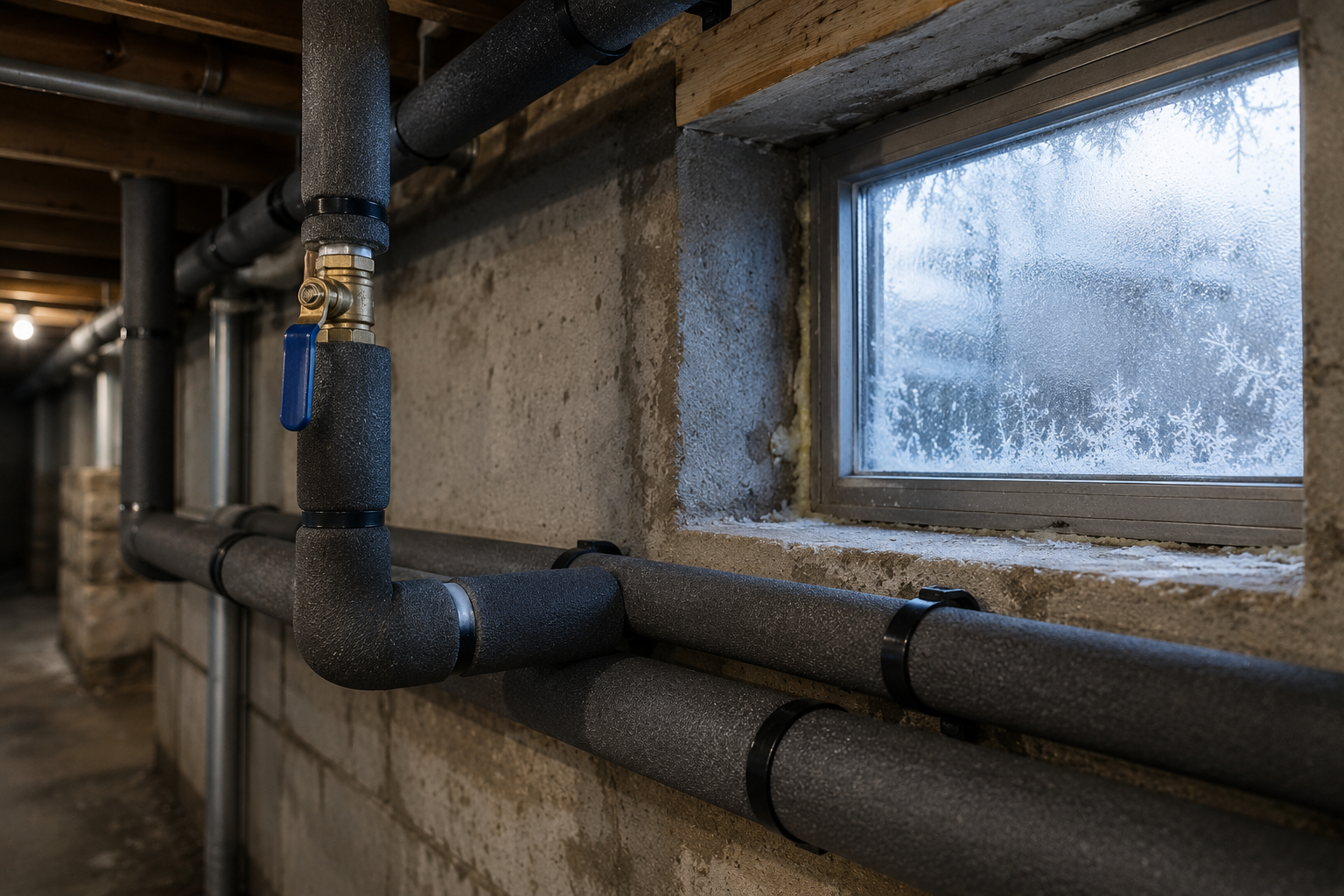
Foam pipe insulation sleeves are inexpensive and slip right over exposed pipes. Focus on basements, crawl spaces, garages, and any line running along an exterior wall. This single step is the most effective and affordable protection you can add, and it pays for itself many times over the first time it prevents a freeze.
Disconnect and Drain Outdoor Hoses and Spigots
Outdoor faucets freeze first, and the ice can travel back into the pipe inside your wall. Before the first freeze, disconnect garden hoses, drain them, and shut off the indoor valve that supplies each outdoor spigot if your home has one. Consider insulated covers for the spigots themselves for added protection.
Seal Drafts Near Pipes
Cold air finds its way in through gaps around basement windows, foundation cracks, and where pipes pass through walls. Seal these openings with caulk or foam so frigid air is not blowing directly across your plumbing. In older Pittsburgh homes, these drafts are common and easy to overlook.
Know Where Your Main Shutoff Is
Even with prevention, knowing your main water shutoff location and confirming it turns freely is essential. If a pipe ever does fail, this valve is what stops a flood. In most local homes it sits in the basement near the front foundation wall, close to the water meter.
During a Cold Snap: What to Do When Temperatures Drop
When the forecast calls for temperatures in the teens or lower, take these extra steps until the cold passes.
- Let vulnerable faucets drip. A slow drip keeps water moving, and moving water is far harder to freeze than still water. The small amount used is nothing compared to a repair.
- Open cabinet doors under sinks on exterior walls so warm room air can reach the pipes behind them.
- Keep the heat consistent. Maintain the same thermostat setting day and night, and resist the urge to drop it low overnight during a deep freeze to save a little on heating.
- Keep the garage door closed if there are water lines in or near the garage.
- Open interior doors so heat circulates evenly through the house, including to rooms that tend to run cold.
If You Travel During Winter
An empty house during a cold snap is a frozen-pipe risk, because no one is there to notice a problem until it has caused real damage. If you leave town in winter:
- Never turn the heat off. Set the thermostat no lower than 55 degrees so the house stays warm enough to protect the pipes.
- Shut off the main water supply and drain the lines by opening faucets, so even if a pipe were to freeze there is little water in the system to cause damage.
- Ask a neighbor or friend to check the house periodically during extended trips.
- Consider a smart thermostat that alerts you if the temperature inside drops unexpectedly.
Longer-Term Upgrades Worth Considering
If your home has a history of frozen pipes or you want lasting peace of mind, a few upgrades go beyond seasonal prevention.
Heat Tape or Heat Cable
For pipes in especially cold or hard-to-insulate spots, electric heat tape provides controlled warmth along the pipe. It is a worthwhile investment for problem areas that freeze year after year despite insulation.
Rerouting or Insulating Problem Lines
In some older homes, a particular pipe freezes repeatedly because of where it runs. A plumber can sometimes reroute that line to a warmer path or add targeted insulation and air sealing to solve the problem permanently rather than fighting it every winter.
Improving Insulation in Crawl Spaces and Basements
Insulating and sealing an unheated crawl space or basement does more than protect pipes. It improves the comfort and energy efficiency of the whole home, and it keeps the spaces where your plumbing runs above freezing during the coldest stretches.
Want a professional to winterize your plumbing or solve a pipe that freezes every year? Call Knight & Day Plumbing at (412) 887-5862. We help Pittsburgh homeowners prevent freezes before they happen.
Frequently Asked Questions
At what temperature do pipes freeze?
Pipes are generally at risk when temperatures hold at or below 20 degrees for around six hours, though exposed and uninsulated pipes can freeze faster. During Pittsburgh’s deeper cold snaps, unprotected pipes in drafty spaces can freeze overnight.
Should I leave my faucet dripping all winter?
Not all winter, but yes during hard freezes. When temperatures drop into the teens or lower, letting vulnerable faucets drip slightly overnight is a cheap, effective way to keep water moving and prevent a freeze.
Is pipe insulation really worth it?
Absolutely. Foam pipe sleeves cost very little and dramatically reduce the chance of a freeze on exposed pipes. The first time it prevents a burst, it has paid for itself many times over.
The Real Cost of a Burst Pipe Versus Prevention
It helps to put the math in perspective. The prevention steps in this guide, foam pipe sleeves, spigot covers, a tube of caulk, cost very little and an afternoon of effort. A burst pipe is a different story entirely. When a pipe ruptures, it can release several gallons of water per minute, soaking flooring, drywall, insulation, and anything stored nearby before you even notice. The repair to the pipe itself is only part of the bill. The water damage, the drying, and the restoration of ruined materials are usually far more costly and disruptive, and they can mean days or weeks of repair work in your home. Seen that way, the small effort of winterizing your pipes is one of the highest-return things you can do as a homeowner each fall.
Special Considerations for Older Pittsburgh Homes
Pittsburgh’s housing stock includes a large number of homes built generations ago, and these properties carry specific frozen-pipe risks worth knowing. Older homes often have plumbing routed through uninsulated exterior walls and unconditioned basements that newer construction would avoid. Additions built onto older homes frequently have pipes running through poorly insulated spaces. And the masonry and stone foundations common in older neighborhoods can have gaps and cracks that let cold air pour in around pipes. If you own an older home, pay extra attention to sealing drafts, insulating exposed lines, and identifying any pipe that has frozen before, since it is likely to freeze again without intervention. A plumber familiar with the area’s older homes can spot the specific weak points that put your plumbing at risk.
Protect Your Home This Winter With Knight & Day Plumbing
With over 40 years serving Pittsburgh, South Hills, and North Hills, Knight & Day Plumbing has seen what frozen pipes can do and how easily most freezes can be prevented. Our licensed and insured plumbers can winterize your plumbing, insulate vulnerable lines, and solve recurring freeze problems, and we are available 24/7 if a pipe ever does fail. We offer upfront pricing, free estimates, and no hidden fees.
Get ahead of winter before the first hard freeze. Call Knight & Day Plumbing at (412) 887-5862 for pipe protection and winterization throughout the Pittsburgh area.