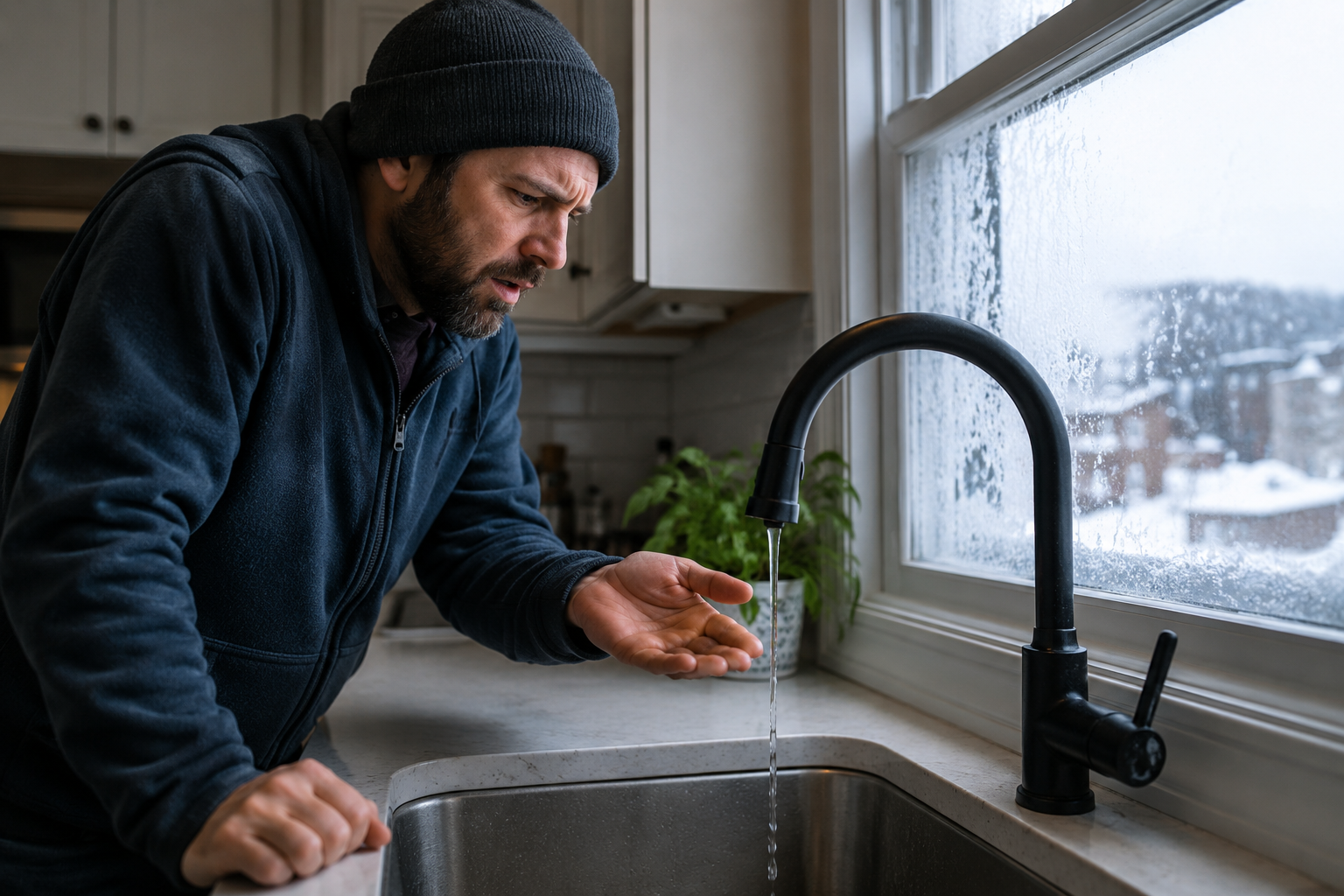
A frozen pipe is one of the few plumbing problems that gets worse by the minute. When water turns to ice inside your lines, it expands with enough force to split copper, crack PVC, and rupture the fittings that hold your whole system together. In Pittsburgh, where a January cold snap can drop overnight temperatures into the single digits and hold them there for days, frozen pipes are not a rare event. They are a seasonal certainty for homes across the city, from the older row houses in Lawrenceville to the hillside properties in Mount Washington where wind exposure makes the problem worse.
This guide walks you through exactly what to do the moment you suspect a frozen pipe, how to thaw it safely, when the situation has crossed the line into an emergency, and how to keep it from happening again. If at any point you are unsure or you see signs of a burst, calling a licensed Pittsburgh plumber is the fastest way to protect your home.
How to Tell If a Pipe Is Frozen
The first sign most homeowners notice is simple: you turn on a faucet and nothing comes out, or only a thin trickle appears. That is your earliest warning, and acting on it quickly can mean the difference between a minor inconvenience and a flooded basement.
Beyond the dry faucet, watch for these indicators:
- Frost or condensation visible on an exposed section of pipe, common on lines running through basements, crawl spaces, and exterior walls.
- A bulge or visible swelling in a pipe, which means ice has already expanded the metal and a rupture may be imminent.
- Strange smells coming from a faucet or drain, which can happen when a blockage forces odors back up the line.
- Whistling, banging, or clanking sounds when you run water, a sign of pressure struggling past a partial ice blockage.
In Pittsburgh homes, the pipes most likely to freeze are the ones with the least insulation and the most cold exposure. That usually means lines along north-facing exterior walls, pipes in unheated basements and garages, and any plumbing running through a crawl space. Kitchens and bathrooms on the outer edge of the house are frequent trouble spots.
What to Do the Moment You Suspect a Frozen Pipe
Speed matters here, but so does doing things in the right order. Follow these steps:
- Keep the faucet open. Open the tap that the frozen pipe feeds. As the ice begins to melt, water and pressure need somewhere to escape. A closed faucet traps that pressure and raises the risk of a burst.
- Locate your main water shutoff valve. Before you do anything else, make sure you know where your main shutoff is and that it turns freely. In most Pittsburgh homes it sits in the basement near the front foundation wall, often close to the water meter. If a pipe bursts, this valve is what stops the flood.
- Identify the frozen section. Run your hand along accessible pipes to find the cold, frost-covered stretch. The blockage is usually in an exposed run, not buried inside a heated wall.
- Begin thawing the pipe gently, using one of the safe methods below.
- Check other faucets. If one pipe froze, others may be close behind. Test taps throughout the house so you can catch additional freezes early.
Safe Ways to Thaw a Frozen Pipe
Once you have found the frozen section and opened the faucet it serves, you can start applying heat. The goal is slow, even warming. Start near the faucet end and work back toward the cold spot, which lets melting water drain out as you go.
Methods That Work
- Hair dryer: Move it back and forth along the pipe. This is the most common and controllable home method.
- Heating pad or heat tape: Wrap it around the frozen section for steady, gentle warmth.
- Warm towels: Soak towels in hot water and wrap the pipe, replacing them as they cool.
- Space heater: Position it to warm the room or area, keeping it a safe distance from anything flammable.
What You Should Never Do
Never use an open flame to thaw a pipe. A blowtorch, propane heater, or any open fire is the leading cause of house fires tied to frozen pipe thawing, and it can also damage the pipe itself. The risk is simply not worth it. If a pipe is buried in a wall or somewhere you cannot reach safely, that is the point to call a professional rather than tearing into drywall on your own.
When a Frozen Pipe Becomes an Emergency
Some frozen pipe situations are beyond a DIY fix, and recognizing that early protects your home from serious water damage. Shut off your main water valve and call an emergency plumber right away if:
- You see water spraying, dripping, or pooling, which means the pipe has already cracked or burst.
- The frozen pipe is inside a wall, ceiling, or floor where you cannot reach it safely.
- You have thawed what you can find but still have no water, suggesting a deeper or hidden blockage.
- Multiple pipes have frozen at once, which can overwhelm a single-handed response.
- You smell sewage or gas, which signals a more serious problem that needs immediate professional attention.
A burst pipe can release several gallons of water per minute. In the time it takes to find a plumber from scratch, that water can soak flooring, ruin drywall, and seep into the structure of your home. This is exactly why Pittsburgh homeowners keep a 24/7 plumber on hand during the winter months.
Burst pipe right now? Shut off your main water valve and call Knight & Day Plumbing at (412) 887-5862. We answer 24/7, including nights, weekends, and holidays, and there is no extra charge for after-hours emergency service.
Why Pittsburgh Pipes Freeze So Often
Pittsburgh winters combine a few factors that make frozen pipes especially common. The city sees long stretches of sub-freezing temperatures, and the housing stock includes a large share of older homes built before modern insulation standards. Many of these homes have plumbing running through uninsulated basements, crawl spaces, and exterior walls that were never designed with deep cold in mind.
Wind chill plays a role too. Homes on the higher elevations around the city, along the slopes and ridges, face stronger winds that pull heat away from exterior walls faster. A pipe that would survive a calm cold night can freeze when the wind is driving hard against the side of the house.
How to Prevent Frozen Pipes This Winter
Prevention costs far less than a burst pipe repair and the water damage that follows. Here are the steps that make the biggest difference for Pittsburgh homes:
Insulate Vulnerable Pipes
Foam pipe sleeves are inexpensive and easy to install on exposed pipes in basements, crawl spaces, and garages. Focus on the lines along exterior walls and anywhere the pipe runs through an unheated space.
Let Faucets Drip During Hard Freezes
When temperatures are forecast to drop into the teens or lower, let a faucet drip slightly overnight. Moving water is much harder to freeze than still water, and the small amount you use is far cheaper than a repair.
Keep Heat Circulating
Open cabinet doors under sinks on exterior walls so warm air can reach the pipes. Keep your thermostat at a consistent temperature day and night, and never let it drop too low to save money during a cold snap. If you travel during winter, keep the heat set no lower than 55 degrees.
Seal Drafts and Disconnect Outdoor Hoses
Seal gaps where cold air enters near pipes, including around basement windows and foundation cracks. Before the first freeze, disconnect and drain garden hoses and shut off the supply to outdoor spigots, since these freeze first and can send ice back into the lines inside your wall.
Frequently Asked Questions
How long does it take for pipes to freeze in Pittsburgh?
Pipes can begin to freeze when temperatures hold at or below 20 degrees for roughly six hours, though exposed and uninsulated pipes can freeze faster. During Pittsburgh’s deeper cold snaps, an unprotected pipe in a drafty basement or crawl space can freeze overnight.
Will a frozen pipe always burst?
No, but the risk is real every time. A pipe bursts when expanding ice raises pressure beyond what the pipe can hold. Thawing it promptly and keeping the served faucet open relieves that pressure and greatly reduces the chance of a rupture.
Should I turn off my water if I have a frozen pipe?
Keep the water on while you thaw the pipe, with the served faucet open. Only shut off the main valve if you see signs of a burst, such as spraying or pooling water. Knowing where your shutoff is before winter arrives saves precious minutes if a pipe does fail.
Trust Your Pittsburgh Plumbers at Knight & Day Plumbing
With over 40 years serving Pittsburgh, South Hills, and North Hills, Knight & Day Plumbing has handled countless frozen and burst pipe calls through some of the coldest winters this region has seen. Our licensed and insured plumbers respond fast, locate the problem, and repair it the right way so it holds through the rest of the season. We offer upfront pricing, free estimates, and 24/7 emergency service with no hidden after-hours fees.
Do not let a frozen pipe turn into a flooded home. Call Knight & Day Plumbing at (412) 887-5862 for fast, reliable service across Pittsburgh, day or night.