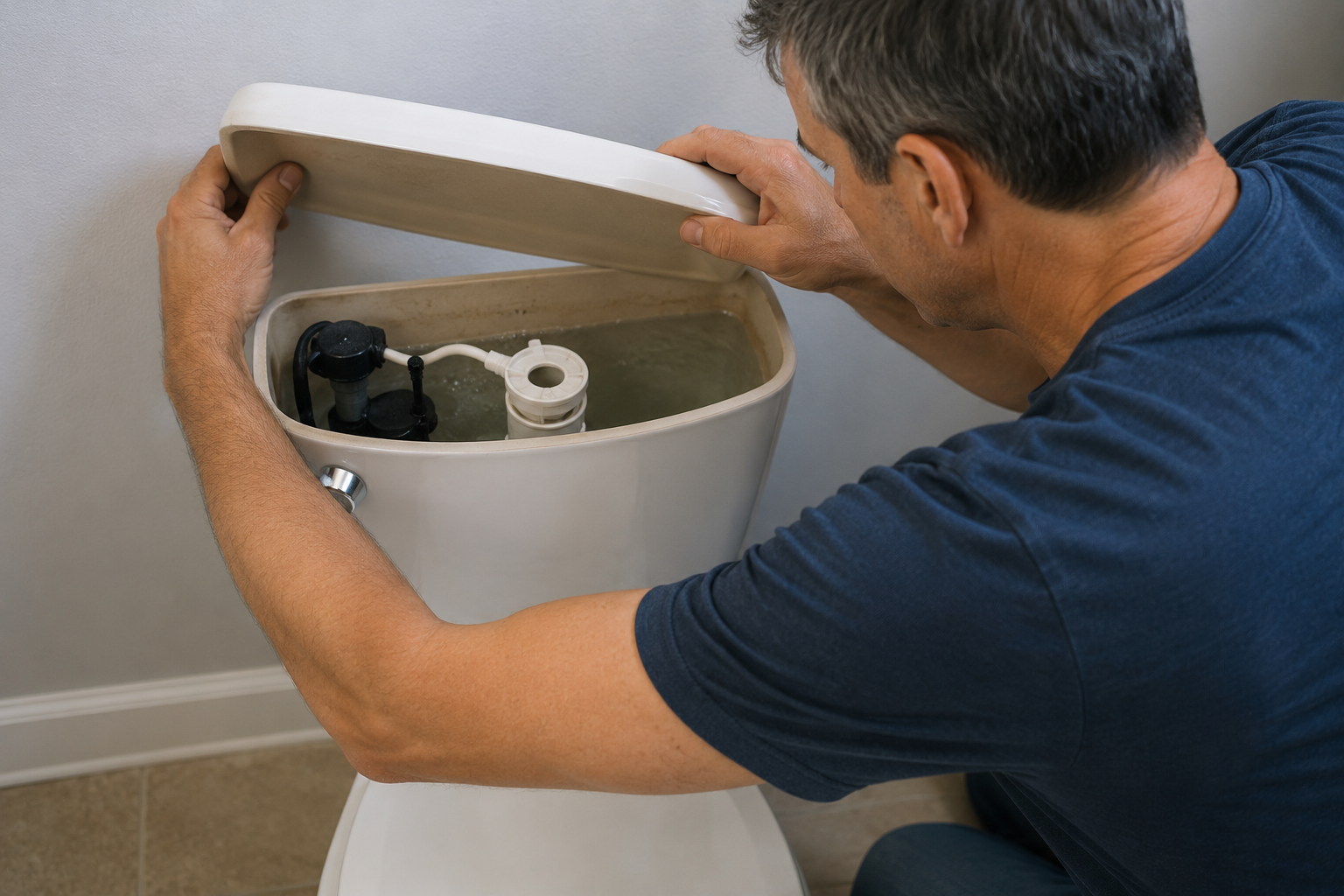
A toilet that runs and runs is more than an annoyance. That constant trickle or periodic refill is water flowing straight down the drain, and it adds up faster than most people realize. According to the EPA’s WaterSense program, a running toilet can waste as much as 200 gallons of water in a single day, which shows up directly on your water bill. The good news is that the most common causes are inexpensive parts inside the tank that you can often diagnose and even replace yourself. This guide walks you through what makes a toilet run, how to find the specific cause, and when it makes sense to call a Pittsburgh plumber.
Almost every running-toilet problem comes down to one of a handful of parts in the tank failing to do its job. Lift the lid off your tank and set it somewhere safe, and you can watch the mechanism work as you troubleshoot.
How a Toilet Tank Actually Works
Understanding the parts makes the fix obvious. When you flush, the flapper at the bottom of the tank lifts and lets the tank water rush down into the bowl. As the tank empties, the flapper drops back and seals the opening. The fill valve then refills the tank, controlled by a float that rises with the water and shuts the valve off at the right level. An overflow tube in the center prevents the tank from overfilling by routing excess water into the bowl. When a toilet runs, one of these parts is out of adjustment or worn out.
The Most Common Causes of a Running Toilet
1. A Worn or Misaligned Flapper
This is the single most common culprit. The flapper is a rubber or plastic seal, and over time it hardens, warps, or collects mineral buildup that keeps it from sealing tightly. When it does not seal, water leaks continuously from the tank into the bowl, and the fill valve keeps running to top off the tank. To check it, press gently on the flapper when the toilet is running. If the running stops, the flapper is the problem.
2. A Float Set Too High
If the float is set too high, the water level rises above the overflow tube and water trickles continuously down the tube into the bowl. You can usually see this: if water is spilling into the overflow tube, the float needs adjusting down. On modern toilets this is often a simple clip or screw on the float arm or column.
3. A Faulty Fill Valve
The fill valve controls water entering the tank. When it wears out, it may fail to shut off completely, causing the toilet to run or cycle on and off. A fill valve that hisses constantly or refills on its own every few minutes is often the cause. Fill valves are inexpensive and designed to be replaced.
4. A Chain That Is Too Short or Too Long
The chain connects the flush handle to the flapper. If it is too short, it holds the flapper slightly open. If it is too long, it can slip under the flapper and prevent a tight seal. Adjusting the chain to the right length so there is a little slack but no tangling often solves a persistent run.
How to Diagnose Your Running Toilet
Work through this quick sequence to find the cause:
- Remove the tank lid and watch the water. Is it overflowing into the central overflow tube? If so, your float is set too high or the fill valve is not shutting off.
- Check the flapper. Look at the seal at the bottom of the tank. Is it sitting flat and sealing? Press on it and see if the running stops.
- Inspect the chain. Make sure it is not too tight, too loose, or caught under the flapper.
- Use the dye test. Put a few drops of food coloring in the tank, wait fifteen minutes without flushing, and check the bowl. If color appears in the bowl, the flapper is leaking and needs replacement.
- Listen for the fill valve. A valve that cycles on by itself or hisses constantly is failing.
Fixes You Can Often Do Yourself
Many running-toilet repairs are well within reach for a homeowner comfortable with simple tools.
- Adjust the float down so the water stops below the top of the overflow tube.
- Shorten or lengthen the chain so the flapper seats fully but is not held open.
- Replace the flapper, an inexpensive part that snaps into place. Bring the old one to the store to match it.
- Replace the fill valve, which takes a bit more effort but is a common and affordable repair with kits widely available.
Before any repair, turn off the water supply at the valve behind the toilet and flush to empty the tank. That keeps the work dry and simple.
When to Call a Plumber
Some running-toilet problems point to something beyond the tank. Call a plumber when:
- You have replaced the flapper and fill valve and the toilet still runs.
- Water is leaking onto the floor around the base, which is a separate and more serious seal problem.
- The toilet runs alongside other plumbing issues, suggesting a pressure or supply problem.
- The toilet is old, cracked, or you would rather have it handled correctly the first time.
- You are dealing with multiple running toilets, which can indicate a water pressure issue worth diagnosing.
Our toilet repair team in Pittsburgh handles running toilets, clogs, leaks at the base, and full toilet installations quickly and cleanly, so you are not left guessing at parts.
Tired of that constant running and a climbing water bill? Call Knight & Day Plumbing at (412) 887-5862 for fast toilet repair anywhere in the Pittsburgh area.
Why Fixing It Quickly Saves Real Money
It is easy to put off a running toilet because it still flushes and functions. But the cost of ignoring it is real. At up to 200 gallons a day, a single running toilet can waste thousands of gallons over a few weeks, and that water is metered and billed. Beyond the bill, a fill valve that runs constantly puts steady wear on the part and can shorten its life further. Fixing a running toilet promptly is one of the cheapest, highest-return plumbing repairs a homeowner can make, often costing only a few dollars in parts to stop a leak that would otherwise cost far more over time.
How Hard Water Plays a Role in Pittsburgh
The moderately hard water common across the Pittsburgh region speeds up the wear that causes running toilets. Mineral deposits build up on the flapper and the valve seat, breaking the seal that keeps the tank watertight. The same minerals can stiffen rubber components and leave scale on the fill valve. This is why flappers and valves in this area sometimes need replacing sooner than the packaging suggests. If you find yourself replacing these parts often, hard water buildup is a likely reason, and a whole-home water treatment approach can extend the life of toilet components along with the rest of your plumbing.
Frequently Asked Questions
Why does my toilet keep running after I flush?
The most common reason is a worn flapper that no longer seals, letting water leak from the tank into the bowl so the fill valve keeps running. A float set too high or a failing fill valve are the next most likely causes.
How much water does a running toilet waste?
The EPA’s WaterSense program notes that a running toilet can waste up to 200 gallons a day. Over a month that is a significant amount of water and a noticeable increase on your bill.
Can I fix a running toilet myself?
Often yes. Adjusting the float or chain and replacing the flapper or fill valve are common DIY repairs with inexpensive parts. If the problem persists after those fixes, or water is leaking onto the floor, it is time to call a plumber.
Toilet Repair Costs and What to Expect
One reason running toilets get ignored is uncertainty about what a repair will cost. The reassuring truth is that the parts involved are inexpensive. A flapper or a fill valve costs only a few dollars, and even a professional repair for a running toilet is typically one of the more affordable plumbing calls you will make. When a plumber comes out, the visit usually starts with confirming the cause, replacing the worn part, and testing the toilet through a full flush-and-refill cycle to be sure the problem is solved. If your toilet has multiple worn components, replacing them together while the plumber is there saves a return trip. The cost of the repair is almost always far less than the water you would waste by letting the problem continue for months.
Signs Your Toilet Needs More Than a Simple Repair
While most running toilets are a quick internal fix, a few symptoms point to a larger issue. Water seeping onto the floor around the base usually means the wax seal beneath the toilet has failed, which is a different and more involved repair than anything in the tank. A toilet that rocks when you sit on it, cracks in the porcelain, or repeated clogs alongside the running can all signal that the fixture itself is reaching the end of its useful life. In those cases, replacing the toilet with a modern, water-efficient model can be the better long-term value, since newer toilets use far less water per flush and pay for themselves over time. A plumber can tell you honestly whether a repair will hold or whether replacement is the smarter move.
Pittsburgh’s Trusted Toilet Repair Team
For over 40 years, Knight & Day Plumbing has handled toilet repairs and installations for homes and businesses across Pittsburgh, South Hills, and North Hills. Our licensed and insured plumbers fix the cause, not just the symptom, with upfront pricing, free estimates, and no hidden fees.
Stop wasting water and money. Call Knight & Day Plumbing at (412) 887-5862 for reliable toilet repair throughout the Pittsburgh area.