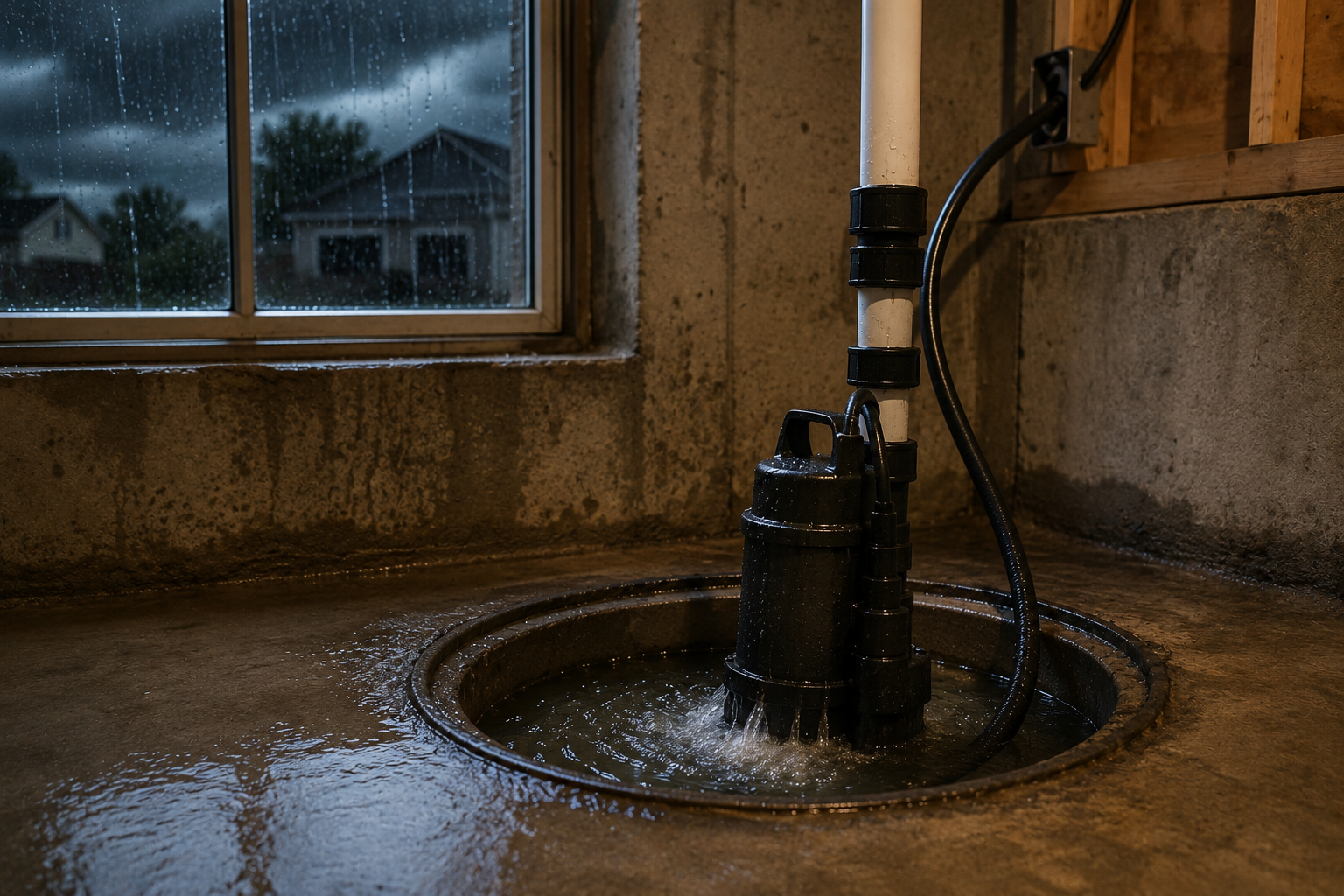
For many Pittsburgh homeowners, the sump pump is the single most important piece of equipment standing between a heavy storm and a flooded basement. It works quietly in a pit at the lowest point of the home, switching on to push out groundwater before it can rise into the living space. The problem is that a sump pump tends to fail at the worst possible moment, during the very storm it is supposed to handle, when demand is highest and the power may be out. This guide explains why sump pumps fail, the warning signs that yours is in trouble, and the steps that keep your basement dry when the rain comes hard.
Pittsburgh’s hilly terrain, heavy seasonal rains, and large stock of homes with basements make sump pump reliability a real concern here. A pump that has run faithfully for years can still fail without warning, which is why understanding the system is worth every homeowner’s time.
How a Sump Pump Protects Your Home
A sump pump sits in a basin, called the sump pit, dug into the lowest part of your basement or crawl space. As groundwater rises around the foundation during rain or snowmelt, it collects in this pit. A float switch senses the rising water and turns the pump on, which then pushes the water out through a discharge pipe and away from the house. When the water level drops, the float switches the pump off. The whole system depends on each part working: the pit, the float, the pump motor, the discharge line, and the power supply. A failure in any one of them can leave water with nowhere to go but up into your basement.
Why Sump Pumps Fail During Storms
Power Outages
This is the most common and frustrating cause. Severe storms that bring the most rain are also the storms most likely to knock out power, and a standard sump pump runs on household electricity. When the power goes out at the peak of a storm, the pump stops exactly when you need it most. This is why a battery backup is so valuable in our area.
The Pump Is Overwhelmed
During an intense downpour, water can enter the pit faster than an undersized or aging pump can remove it. A pump that handles normal rain just fine may simply not keep up with a major storm, allowing the water to rise past it.
A Stuck or Failed Float Switch
The float switch tells the pump when to run. If it gets stuck, tangled, or jammed against the side of the pit, the pump may not turn on when the water rises, or it may run continuously and burn out. Debris in the pit is a frequent cause of a stuck float.
A Frozen or Clogged Discharge Line
The pump can be working perfectly, but if the discharge pipe is clogged with debris or frozen during a winter storm, the water has nowhere to go and backs up into the pit. The discharge line outside the home needs to stay clear and properly pitched away from the foundation.
Age and Mechanical Wear
Sump pumps do not last forever. Most have a service life of around 7 to 10 years. A pump near or past that age is far more likely to fail under the stress of a heavy storm, and replacing it on schedule is cheaper than dealing with a flood.
Warning Signs Your Sump Pump Is in Trouble
A failing pump usually gives clues before it quits entirely. Watch and listen for:
- Strange noises such as grinding, rattling, or excessive humming, which point to worn bearings or a failing motor.
- The pump running constantly or cycling on and off rapidly, which signals a float or sizing problem and wears the motor out fast.
- Visible rust, corrosion, or vibration during operation.
- The pump failing to turn on when the pit is filling, often a stuck float.
- Water that is slow to clear from the pit after the pump runs, suggesting it is losing capacity.
- Moisture, dampness, or a musty smell in the basement even between storms.
If you notice any of these, have the pump inspected before the next major storm rather than discovering the problem mid-flood.
How to Prevent Sump Pump Failure
Install a Battery Backup System
Given how often Pittsburgh storms bring both heavy rain and power outages, a battery backup sump pump is one of the smartest investments a homeowner can make. It takes over automatically when the power fails, keeping the basement dry through the outage. For homes with a history of flooding, this single upgrade often prevents the worst-case scenario.
Test the Pump Regularly
Pour a bucket of water into the pit to raise the float and confirm the pump kicks on, removes the water, and shuts off properly. Do this every few months and especially before the rainy season. A test takes minutes and reveals a dead pump while there is still time to fix it.
Keep the Pit and Discharge Line Clear
Remove debris from the sump pit so it cannot jam the float or clog the pump intake. Outside, make sure the discharge pipe is clear, directs water well away from the foundation, and is protected against freezing in winter.
Replace the Pump on Schedule
If your pump is approaching 7 to 10 years old, plan to replace it before it fails. A planned replacement on a dry day is far less stressful and less expensive than an emergency during a storm.
Consider a Backup Pump
For homes especially prone to flooding, a secondary pump provides redundancy. If the primary pump fails or is overwhelmed, the backup takes over, adding another layer of protection during the heaviest storms.
Worried your sump pump won’t hold up to the next storm? Call Knight & Day Plumbing at (412) 887-5862. We inspect, repair, and install sump pumps and battery backups across the Pittsburgh area.
What to Do If Your Sump Pump Fails Mid-Storm
If the water is rising and the pump is not keeping up, act quickly to limit damage.
- Move valuables off the basement floor and away from rising water if you can do so safely.
- Do not enter standing water if there is any chance it has reached electrical outlets or the pump’s wiring. Water and electricity together are dangerous.
- If it is safe, check whether the pump has simply lost power or whether the float is stuck, which you may be able to free.
- Call an emergency plumber. A professional can get a working pump running and help you manage the water before it causes lasting damage.
Frequently Asked Questions
How long do sump pumps last?
Most sump pumps last around 7 to 10 years. A pump near or past that age should be inspected regularly and replaced before it fails during a storm.
Do I need a battery backup sump pump in Pittsburgh?
It is strongly worth considering. Because the storms that bring the heaviest rain often knock out power at the same time, a battery backup keeps your basement protected during exactly the conditions when a standard pump would stop working.
How often should I test my sump pump?
Test it every few months and always before the rainy season. Pour a bucket of water into the pit to confirm the pump turns on, clears the water, and shuts off as it should.
Why Pittsburgh’s Terrain Makes Sump Pumps Essential
Pittsburgh’s geography plays directly into basement flooding risk. The region’s hills and valleys channel rainwater and runoff, and homes built into or at the base of slopes often deal with significant groundwater pressure against their foundations during heavy rain. Clay-heavy soil, common in the area, drains slowly and holds water against the foundation rather than letting it disperse. Add the region’s heavy seasonal storms and rapid snowmelt, and many local basements would take on water regularly without a working sump pump. This is why the sump pump is not an optional luxury for a large share of Pittsburgh homes but a core piece of the home’s defense against water damage. Understanding that your home depends on it is the first step toward keeping it reliable.
Sump Pump Maintenance Through the Seasons
A sump pump rewards a little seasonal attention with years of reliable service. In spring, before the heaviest rains arrive, test the pump and clean out the pit so the float and intake are clear. In summer, check that the outdoor discharge line is directing water well away from the foundation and is not blocked by overgrowth. In fall, clear leaves and debris that could clog the discharge line, and confirm the pump is ready for the wet season. In winter, make sure the discharge line is protected against freezing, since a frozen discharge pipe will back water up into the pit even when the pump itself is working. This simple seasonal rhythm catches small problems before they become storm-day failures, and it is far easier than dealing with a flooded basement.
Keep Your Basement Dry With Knight & Day Plumbing
For over 40 years, Knight & Day Plumbing has helped Pittsburgh, South Hills, and North Hills homeowners protect their basements from storm flooding. Our licensed and insured plumbers inspect, repair, and install sump pumps and battery backup systems, and we are available 24/7 when a storm puts your pump to the test. We offer upfront pricing and no hidden fees.
Do not wait for the next big storm to find out your pump has failed. Call Knight & Day Plumbing at (412) 887-5862 for sump pump service throughout the Pittsburgh area.